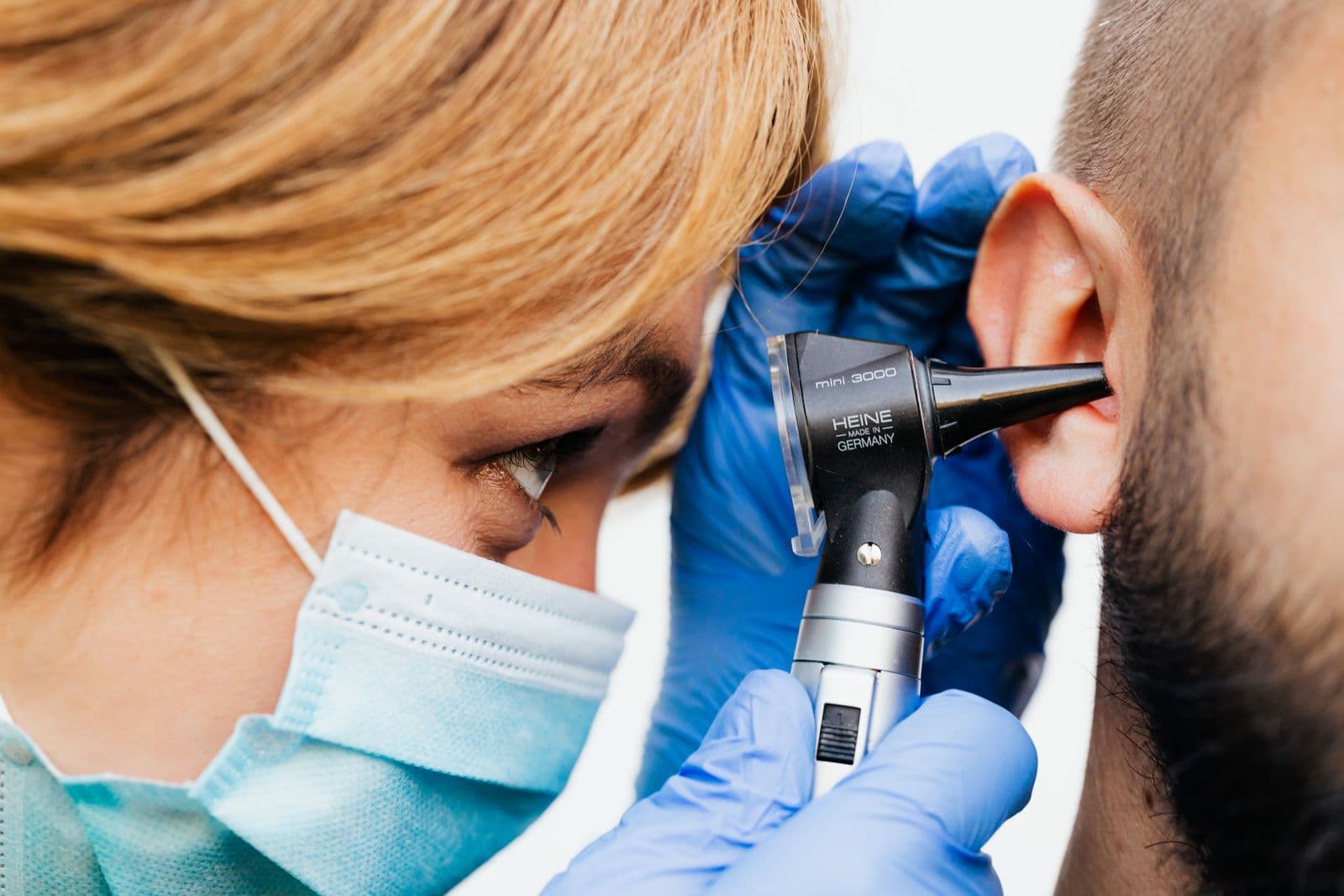

An Emergency Hidden Behind a Common Symptom
Sudden sensorineural hearing loss (SSNHL) is one of the most underrecognized true emergencies in primary care. A patient wakes up with hearing loss in one ear, assumes it's wax or fluid from a cold, and waits days or weeks before seeking care. By the time the diagnosis is made, the window for effective treatment may have closed.
The reality: SSNHL can be largely or completely reversible if treated within days, but recovery rates drop substantially as time passes. The treatment is straightforward — high-dose corticosteroids — but only if the diagnosis is recognized in time.
At Zimmer Medical Group, we evaluate hearing changes urgently and refer for audiometry and ENT evaluation when SSNHL is suspected.
What Sudden Sensorineural Hearing Loss Is
SSNHL is defined as:
- Hearing loss of ≥ 30 decibels
- Affecting at least three consecutive frequencies
- Occurring within 72 hours
- Sensorineural (cochlea or auditory nerve) origin, not conductive
Most cases affect one ear; bilateral cases are rare and concerning for systemic causes.
Why It Gets Missed
Common reasons for delayed diagnosis:
- Patients assume it's wax, fluid, or "ears popping"
- Symptoms attributed to a recent cold or sinus infection
- Initial physician evaluations focus on the external ear
- Audiometry not promptly obtained
- Patients themselves wait expecting it to resolve
This is why patient education matters: any sudden hearing change in one ear, particularly if persistent, warrants prompt evaluation.
Recognizing the Symptoms
- Sudden onset hearing loss in one ear (rarely both)
- Often noticed on awakening or while talking on the phone
- Sometimes preceded by a "pop" or click
- Frequently accompanied by tinnitus (ringing) — see our tinnitus article
- May have ear fullness or pressure
- Sometimes mild dizziness or imbalance
- Usually no significant pain (severe pain suggests other diagnosis)
The combination of sudden one-sided hearing loss with tinnitus is particularly characteristic.
What Causes SSNHL
In most cases (about 90 percent), no specific cause is identified — termed "idiopathic" SSNHL. Suspected mechanisms include:
- Viral infections of the inner ear
- Vascular events (small stroke affecting cochlear blood supply)
- Autoimmune inner ear disease
- Membrane rupture in the inner ear
The remaining cases have identifiable causes:
- Acoustic neuroma (vestibular schwannoma) — 1–10 percent of SSNHL
- Lyme disease, syphilis, other infections
- Autoimmune conditions
- Trauma (head injury, barotrauma)
- Ototoxic medications
- Multiple sclerosis
- Stroke affecting the inner ear or auditory pathways
- Inner ear hemorrhage
- Meniere's disease (typically progressive rather than truly sudden)
Diagnostic Workup
Initial Evaluation
- Detailed history (onset, course, associated symptoms, recent illness, medications)
- Physical exam, including thorough otologic examination
- Tuning fork tests (Weber and Rinne) to differentiate sensorineural from conductive
The Weber test is particularly informative: in sensorineural hearing loss, the tuning fork sound lateralizes to the better-hearing ear; in conductive loss, it lateralizes to the worse-hearing ear.
Audiometry
A formal audiogram is essential and should be obtained urgently:
- Confirms diagnosis
- Quantifies severity
- Documents pattern (low-frequency, mid-frequency, high-frequency, all frequencies)
- Provides baseline for monitoring response to treatment
Additional Workup
- MRI of the internal auditory canals with contrast — recommended in all cases to evaluate for acoustic neuroma; can be obtained acutely or after treatment initiation
- Lab tests in selected cases — CBC, ESR/CRP, RPR, Lyme testing, ANA in selected patients
- Audiogram repeated at intervals to assess recovery
Treatment should not be delayed waiting for full workup — start steroids while workup is in progress.
Treatment
Oral High-Dose Corticosteroids
- Prednisone 60 mg daily for 7–14 days, then taper
- The earlier started, the better — significant difference in outcomes when started within 7 days vs. later
- Best evidence supports starting within 14 days, with ongoing potential benefit (decreasing) up to 6 weeks
Intratympanic Steroid Injections
- Methylprednisolone or dexamethasone injected directly through the eardrum
- Performed by ENT
- Used as primary treatment, salvage therapy after oral steroids, or in patients who can't tolerate oral steroids (uncontrolled diabetes, etc.)
- Concentrates steroid in the inner ear with less systemic exposure
Other Considerations
- Hyperbaric oxygen therapy — some evidence in selected centers
- Antiviral therapy — limited evidence; sometimes added in suspected viral cases
- Other treatments largely investigational
Recovery and Prognosis
Outcomes vary significantly:
- Roughly 32–65 percent of patients recover spontaneously even without treatment
- Treatment improves recovery rates and degree of recovery
- Recovery typically occurs within the first 2 weeks
- Maximum recovery usually evident by 3 months
Better Prognosis Factors
- Earlier treatment
- Less severe initial loss
- Younger age
- Low-frequency or mid-frequency loss patterns
- Absence of dizziness
Worse Prognosis Factors
- Severe initial hearing loss
- Older age
- Associated dizziness
- Down-sloping or all-frequency loss patterns
- Delayed treatment
After Initial Treatment
For patients with persistent hearing loss:
- Hearing aids — modern hearing aids can significantly help even substantial loss
- CROS (contralateral routing of signal) hearing aids for unilateral loss
- Cochlear implants in selected cases of severe to profound loss
- Tinnitus management
- Counseling and support for hearing loss adjustment
What Patients Should Do
If you experience sudden hearing loss in one ear:
- Don't wait. Don't assume it's wax or fluid.
- Don't try over-the-counter ear drops — they won't help sensorineural loss and may delay diagnosis
- Seek urgent medical evaluation — same day or next day, not "next available appointment"
- Be specific about timing — sudden vs. gradual matters
- Mention any associated symptoms — tinnitus, dizziness, ear fullness
The first 72 hours matter most for treatment effectiveness, with declining benefit thereafter.
What to Differentiate
Conductive Hearing Loss (Different Workup)
- Cerumen impaction
- Middle ear fluid (eustachian tube dysfunction, recent upper respiratory infection)
- Otitis media
- Tympanic membrane perforation
- Ossicular issues
These typically present with a sense of fullness, sometimes pain, and often improve with treatment of the underlying cause.
Other Hearing Concerns
- Gradual hearing loss — usually presbycusis (age-related); see our article on hearing loss and dementia
- Noise-induced hearing loss — usually bilateral, gradual
- Meniere's disease — episodic vertigo, hearing fluctuation, tinnitus, ear fullness
Long-Term Considerations
Patients who have had SSNHL should:
- Have periodic audiograms to monitor the affected ear and the other ear
- Be alert for any changes in the unaffected ear
- Protect remaining hearing from noise damage
- Continue with hearing aids or other devices as appropriate
- Be aware that recurrence in the same ear is uncommon but possible
What the First Week Looks Like From the Patient's Side
The clinical steps above happen quickly, and patients often leave the first visit with a prescription and a lot of questions. This is how I explain the week ahead.
Steroids, side effects, and the conditions that complicate them
The oral course is a short, high dose of prednisone, and even a couple of weeks can raise blood sugar, disturb sleep, raise blood pressure, and unsettle mood. For a patient with diabetes it usually means checking glucose more often and sometimes a temporary medication change; for someone with poorly controlled diabetes or a history of steroid intolerance, the ENT may use the injection through the eardrum instead, which spares the rest of the body. The NIDCD's page on sudden deafness summarizes the treatment options in plain language. Do not stop the steroid early because you feel odd; call us and we will adjust.
What we are watching for in the follow-up
A repeat audiogram in the first weeks tells us whether hearing is recovering, and the MRI answers the one question that must not be skipped: whether an acoustic neuroma is behind the loss. Most scans are normal, but a small proportion are not, and a benign tumor found early is managed very differently from one found years later. If the loss came with spinning vertigo, repeated episodes, and fullness in the ear, Meniere's disease enters the picture, and that is a chronic condition with its own plan rather than a one-time emergency.
Living with the ringing and the imbalance
Tinnitus often outlasts the hearing loss and is the symptom patients find hardest, especially at night in a quiet house. Sound enrichment, a fan or white noise, and treating the sleep disruption help more than any pill, and the ringing usually softens over months as the brain adapts. Mild imbalance in the first weeks generally settles; persistent dizziness needs a separate look. MedlinePlus has a good overview of hearing aid options for the ear that does not fully recover, and our ENT team coordinates the audiology follow-up so the three-month check does not get lost.
When to See Your Doctor
Urgent (same day or emergency department):
- Sudden hearing loss in one or both ears
- Sudden hearing loss with dizziness
- Hearing loss after head trauma
- Hearing loss with neurologic symptoms
Routine evaluation:
- Gradual hearing changes
- Tinnitus
- Ear fullness or pressure not associated with sudden hearing loss
- Hearing concerns related to noise exposure
The American Academy of Otolaryngology–Head and Neck Surgery clinical practice guidelines provide detailed recommendations on SSNHL evaluation and management.
Sudden hearing loss in one ear — even if it seems mild? Contact Zimmer Medical Group immediately. Time-sensitive treatment can preserve hearing if started early.


