
Two Common Overuse Injuries Around the Elbow
Tennis elbow (lateral epicondylitis) causes pain at the bony prominence on the outside of the elbow. Golfer's elbow (medial epicondylitis) causes pain on the inside. Despite the names, most cases occur in people who have never played either sport — they develop from any repetitive activity that loads the wrist tendons.
In St. Petersburg, we see these injuries from pickleball, gardening, painting, plumbing, mechanic work, computer use, and yes — actual tennis and golf. At Zimmer Medical Group, we treat them with an evidence-based approach that often surprises patients used to older recommendations.
What Is Actually Happening (It Is Not Inflammation)
For decades, these conditions were treated as inflammatory ("tendinitis"). Modern research has shown they are predominantly degenerative — the tendon shows breakdown of collagen rather than inflammatory cells. This is why the term "tendinosis" or "tendinopathy" has largely replaced "tendinitis" in current literature, and why anti-inflammatory medications and steroid injections have a more limited role than once thought.
Recognizing Each Condition
Lateral Epicondylitis (Tennis Elbow)
- Pain at the bony bump on the outside of the elbow
- Pain with gripping, lifting (especially with palm down), or shaking hands
- Often radiates down the forearm
- Tender to direct pressure over the lateral epicondyle
Medial Epicondylitis (Golfer's Elbow)
- Pain at the bony bump on the inside of the elbow
- Pain with wrist flexion against resistance, gripping, or twisting motions
- Less common than tennis elbow
- Can be associated with ulnar nerve irritation (numbness in the ring and pinky finger)
Both conditions are typically diagnosed clinically; imaging is rarely needed unless symptoms persist beyond several months or another condition is suspected.
What Mimics These Conditions
- Cervical radiculopathy — a pinched nerve in the neck causing radiating arm pain
- Radial tunnel syndrome — entrapment of the radial nerve mimicking tennis elbow
- Cubital tunnel syndrome — ulnar nerve compression at the elbow mimicking golfer's elbow
- Elbow osteoarthritis — diffuse elbow pain with stiffness
- Bicipital tendinopathy — anterior elbow pain
If pain has neurologic features (numbness, tingling, weakness), evaluation for nerve entrapment is reasonable.
What Actually Works
1. Activity Modification (Not Complete Rest)
Identify and modify the aggravating activity. Continued tendon loading helps healing — but the loading needs to be appropriate, not painful at high intensity. Returning to the offending sport without modifications is the most common reason for recurrence.
2. Eccentric Strengthening
This is the most evidence-supported treatment. Eccentric exercises (controlled lengthening contractions) stimulate tendon remodeling. The classic exercise:
- Sit with the forearm supported, palm down (for tennis elbow) or palm up (for golfer's elbow)
- Hold a light weight (1–3 pounds) or rubber bar
- Use the opposite hand to passively lift the wrist up
- Slowly lower the weight back down using only the affected wrist (5 seconds)
- Repeat 15 times, three sets, daily
The Tyler Twist (using a FlexBar) is a refined version that has strong research support for tennis elbow.
3. Counterforce Bracing
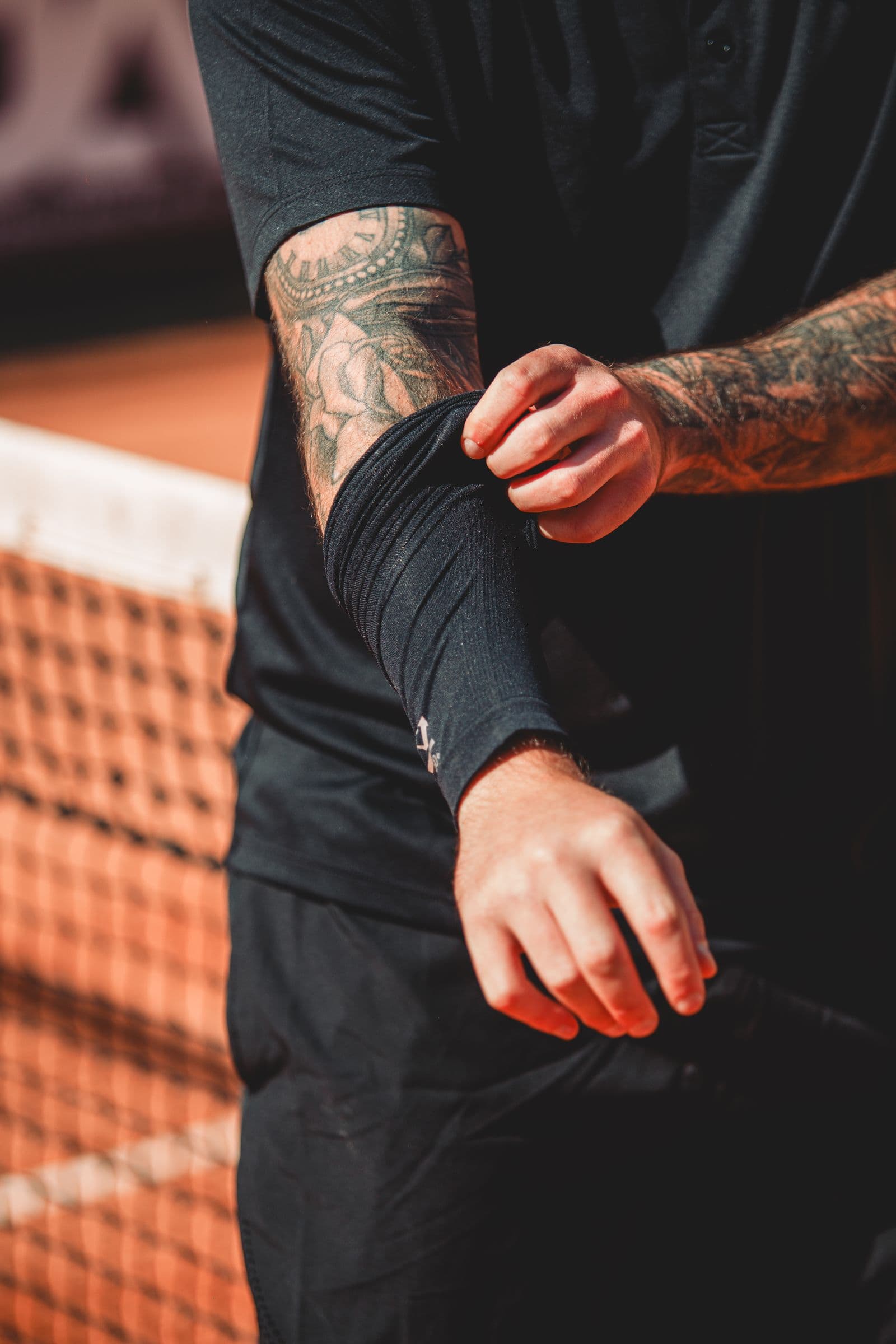
A forearm strap worn just below the elbow can reduce strain on the tendon during activities. Useful as an adjunct, not a cure.
4. Topical NSAIDs
Topical diclofenac (Voltaren gel) — now over-the-counter — provides modest pain relief without the systemic risks of oral NSAIDs.
5. Patience
These conditions take 3–12 months to fully resolve in most cases. Patients who expect a few weeks of treatment to fix things are often disappointed.
Where Steroid Injections Fit (and Don't)
For decades, corticosteroid injections were a standard treatment. Modern evidence has shifted significantly:
- Steroid injections provide good short-term pain relief (4–6 weeks)
- At 6–12 months, steroid-injected patients often do worse than those who did not get injected
- Repeated injections may weaken the tendon and increase rupture risk
Current practice: reserve injections for severe symptoms requiring quick relief or to bridge to physical therapy — not as first-line treatment.
Newer Options for Stubborn Cases
For patients who have failed 6–12 months of conservative care:
- Platelet-rich plasma (PRP) injections — better evidence than steroids for long-term outcomes; not always covered by insurance
- Tenex (percutaneous tenotomy) — outpatient procedure removing degenerated tendon tissue with minimal downtime
- Surgery — debridement of degenerated tendon, performed open or arthroscopically; reserved for true treatment failures (less than 10 percent of cases)
Prevention for Athletes
For pickleball players, golfers, and tennis players:
- Equipment matters — racket grip size, string tension, and club fit can dramatically affect elbow load
- Technique matters — a tennis pro or golf pro can identify form issues that overload the tendon
- Warm-up and progressive loading reduce injury risk
- Cross-training reduces repetitive stress
- Don't push through pain — early intervention is far better than chronic tendinopathy
What Quietly Keeps Elbow Tendinopathy Going
The load you do not count as exercise
Patients often stop the sport and still fail to improve, because the tendon is being loaded all day by things nobody calls exercise: carrying grocery bags with a straight arm, gripping a phone, wringing a towel, a mouse that sits too far from the body, hedge trimmers in a Florida yard that grows twelve months a year. Take an honest inventory of what your hand grips and lifts palm-down through the week. Changing how you carry and where the mouse sits often does more than the brace. MedlinePlus lists the daily activities most often responsible.
Pain relief without the systemic risks
Topical diclofenac is our first choice for pain because the drug stays mostly in the tissue. Oral naproxen or ibuprofen taken for weeks raises blood pressure, irritates the stomach, and strains the kidneys, which is a real concern for patients over 65 or those already on a diuretic or a blood pressure medication. If you need daily oral anti-inflammatories to function for more than a couple of weeks, that is a sign the plan needs a physical therapist rather than a bigger bottle. The NIAMS overview of tendon injury explains why loading, not medication, drives recovery.
When the elbow is not the real problem
Persistent pain that does not behave like tendinopathy deserves a second look. Numbness in the thumb and first two fingers points toward carpal tunnel syndrome, which frequently coexists with elbow pain in people who grip for a living. A neck that is stiff and pain that runs down the whole arm suggests the nerve root rather than the tendon. Shoulder pain that wakes you at night with the elbow pain is often a rotator cuff injury compensating for the same overuse. Patients with diabetes heal tendons more slowly and are more likely to develop tendinopathy at several sites at once, so blood sugar control is part of the treatment. The AAOS OrthoInfo page is a good patient reference, and our musculoskeletal team coordinates therapy and any injection or referral.
When to See Your Doctor
- Elbow pain limiting daily activities or work
- Symptoms persisting beyond 6–8 weeks of self-care
- Numbness, tingling, or weakness in the hand
- Visible swelling or bruising
- Pain that wakes you at night
Your doctor can confirm the diagnosis, rule out mimics, prescribe appropriate physical therapy, and discuss injection or procedural options when indicated.
The American Society for Surgery of the Hand provides excellent patient resources on elbow tendinopathy and related conditions.
Persistent elbow pain not improving on its own? Contact Zimmer Medical Group for an exam, a structured treatment plan, and clear guidance on when more advanced options make sense.


