
How Much Protein Do I Need Per Day?
The short answer for most healthy adults is 0.8 grams of protein per kilogram of body weight per day. For a 150-pound person, that is about 55 grams. For a 200-pound person, about 73 grams.
The more useful answer is that this number is a floor, not a goal, and that after about 65 most people should aim higher — roughly 1.0 to 1.2 grams per kilogram per day, which works out to about 68 to 82 grams for that same 150-pound person.
To convert your own weight, divide pounds by 2.2 to get kilograms, then multiply by your target. It is worth doing the arithmetic once, because almost everyone who does it discovers their real intake is well under what they assumed — particularly at breakfast.
Where the RDA Comes From, and Why It Is a Floor
The Recommended Dietary Allowance is set at the level that prevents deficiency in nearly all healthy adults. It answers the question of how little you can eat without losing nitrogen balance. It was never designed to answer how much supports strength, recovery from illness, or bone maintenance in a 78-year-old.
That distinction explains an argument patients see online. The RDA is not wrong; it is answering a narrower question than most people are asking. MedlinePlus and the National Institute on Aging both frame protein this way for older adults.
Why Adults Over 65 Need More
Two things change with age.
- Anabolic resistance. Aging muscle responds less efficiently to a given amount of dietary protein. A serving that would have triggered muscle protein synthesis at 30 may not do so at 75, so the threshold per meal rises.
- Illness and hospitalization. Older adults lose muscle rapidly during acute illness, surgery, or even a few days of bed rest, and rebuilding it requires more protein and more resistance work than it did decades earlier.
That combination drives the progressive muscle loss we describe in our article on sarcopenia after 60. It is also why protein without resistance training accomplishes far less than the two together, a point our guide to strength training after 60 develops in detail.
Protein also matters for bone. The protein matrix is what mineral is deposited onto, and adequate intake supports bone maintenance in patients with osteoporosis or low bone density alongside calcium, vitamin D, and weight-bearing activity.
Spread It Across the Day, Not All at Dinner
This is the change that helps most of our patients, and it costs nothing.
A typical American pattern is a nearly protein-free breakfast, a modest lunch, and 50 grams at dinner. Because there appears to be a per-meal threshold for stimulating muscle protein synthesis — roughly 25 to 30 grams in older adults — that pattern wastes most of the day.
Aim for 25 to 30 grams at each of three meals. For most people, that means fixing breakfast:
- Two eggs plus a cup of Greek yogurt gets you there.
- A cup of cottage cheese with fruit gets you most of the way.
- Toast, cereal, a banana, and coffee will not, no matter how healthy it otherwise is.
Older adults with poor appetite often do better with a substantial breakfast and lunch and a lighter dinner, which is the reverse of the usual habit.
What That Looks Like in Real Food
Approximate protein content, using ordinary portions:
- 3 ounces of cooked chicken breast — about 26 grams
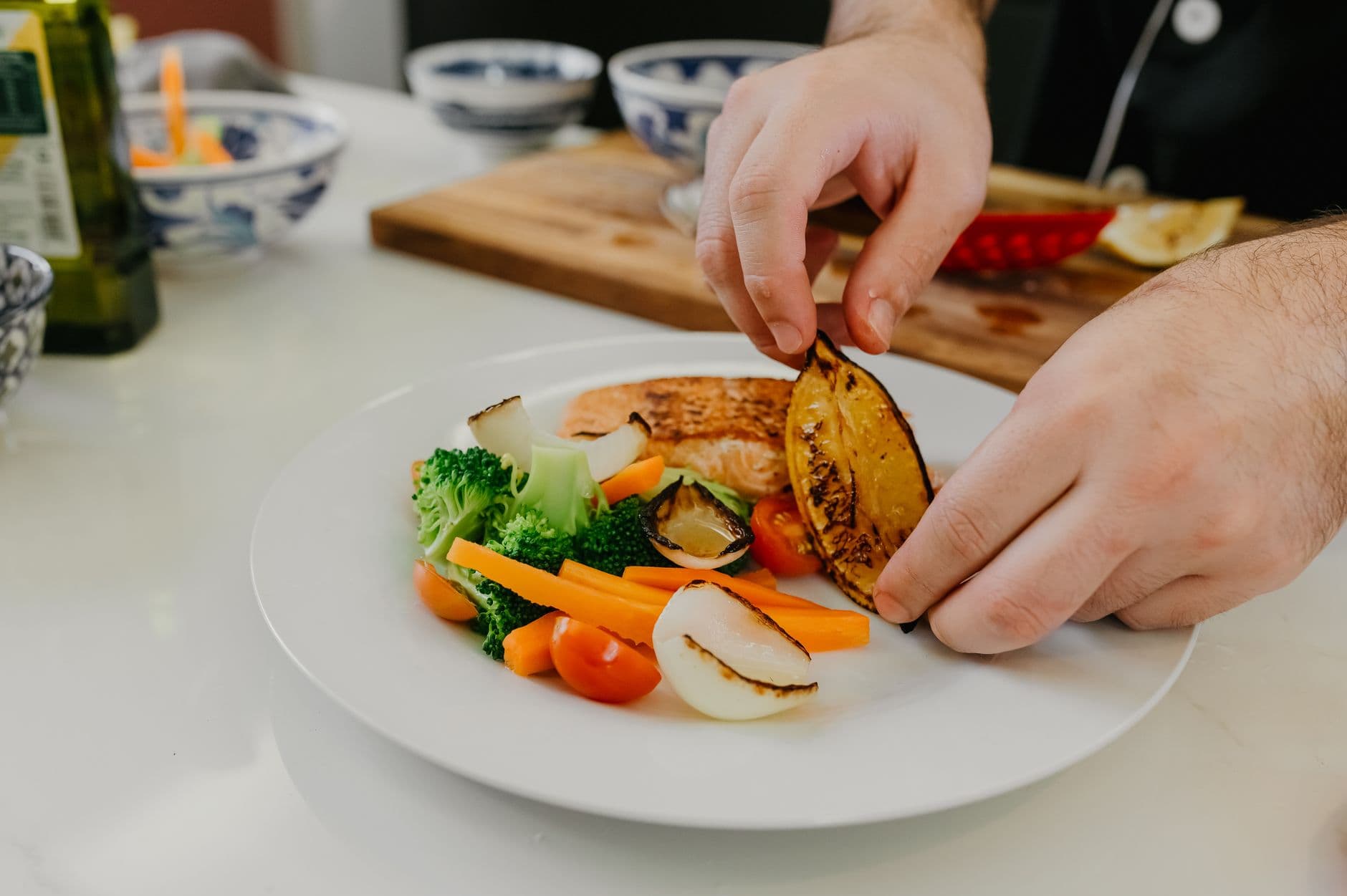
- 3 ounces of salmon or other fish — about 20 to 22 grams
- 3 ounces of lean beef or pork — about 22 to 25 grams
- 1 cup of plain Greek yogurt — about 20 grams
- 1 cup of cottage cheese — about 25 grams
- 1 large egg — about 6 grams
- 1 cup of milk — about 8 grams
- 1 cup of cooked lentils — about 18 grams
- 1 cup of cooked black beans — about 15 grams
- 4 ounces of firm tofu — about 10 grams
- 1 ounce of almonds or peanut butter — about 6 to 7 grams
Three ounces of meat is roughly the size of a deck of cards, which is smaller than most restaurant portions and larger than most home portions.
Plant Versus Animal Protein, and Whether Powders Help
Animal proteins contain all the essential amino acids in generous proportions and are efficiently used. Most single plant proteins are lower in one or another amino acid, particularly leucine, which is the one most closely tied to the muscle-building signal.
That is not an argument against plant protein. It is an argument for variety and for slightly larger portions. Legumes, soy, whole grains, nuts, and seeds eaten across a day cover the requirement comfortably, and soy in particular is complete on its own. Plant-forward eating carries real cardiovascular and metabolic benefits that matter at least as much as the amino acid arithmetic.
Powders are food, not medicine. They are convenient, they are useful for someone with a small appetite or difficulty chewing, and whey is well absorbed. They are not superior to eggs, yogurt, or fish, they are unnecessary if you are already meeting your target, and because supplements are loosely regulated we suggest choosing products carrying independent third-party testing.
Protein on GLP-1 Therapy
This deserves its own note. Medications such as semaglutide and liraglutide reduce appetite substantially, and a meaningful share of the weight lost on them is lean mass rather than fat — a bigger concern in an older adult who does not have muscle to spare.
Practical steps we recommend:
- Eat the protein portion of the meal first, before appetite runs out.
- Prioritize protein density over volume: eggs, yogurt, fish, poultry, and legumes rather than salads and broth.
- Smaller, more frequent protein-containing meals usually go down better than three large ones.
- Add resistance training two or three days a week. This is not optional if preserving muscle matters to you.
- Expect to fall short some days, and use a shake to fill the gap rather than skipping.
Nausea and early fullness are manageable with dose timing and food choices, which we cover in our guide to managing GLP-1 side effects.
The Kidney Question
The common belief that high protein damages kidneys comes from patients who already have kidney disease, where the picture is genuinely different.
In people with normal kidney function, higher protein intake within the ranges discussed here has not been shown to cause kidney damage. In advanced chronic kidney disease that is not yet being treated with dialysis, protein is often deliberately restricted to reduce the filtering burden — and, confusingly, people on dialysis need substantially more protein than average, because dialysis removes amino acids.
The practical rule is simple. If you have reduced kidney function, do not set your own protein target. We will set it with you, and often with a renal dietitian. The National Institute of Diabetes and Digestive and Kidney Diseases publishes patient guidance on eating with kidney disease that is worth reading alongside that conversation.
Patients with diabetes should also know that protein has minimal direct effect on blood sugar and can blunt the rise from a carbohydrate-containing meal, which makes protein at breakfast doubly useful.
Hitting the Target When Appetite, Budget, or Teeth Get in the Way
Knowing the number is the easy part. Most of the patients who fall short in St. Petersburg are not short on knowledge; they are short on appetite, cooking energy, dental comfort, or money. Each has a workaround.
On a fixed income
Protein does not have to mean fresh fish and chicken breast. Eggs, canned tuna and salmon, dried or canned beans, peanut butter, cottage cheese, and nonfat dry milk stirred into oatmeal or soup are among the least expensive protein sources per gram. Frozen fish and chicken thighs cost less than fresh and keep for months, which matters if you shop rarely or hurricane season interrupts the routine. Our retiree nutrition guide has meal ideas built around those staples.
Dentures, dry mouth, and trouble swallowing
Meat that is hard to chew simply gets skipped. Soft, high-protein foods fill the gap: scrambled eggs, Greek yogurt, cottage cheese, tofu, fish, ground meat in sauces, lentil soup, and smoothies made with milk or a scoop of whey. Dry mouth from medications makes swallowing bread and dry chicken harder, so moist preparations and a glass of water with meals help. Persistent trouble swallowing is a symptom we evaluate, not something to eat around.
Summer appetite and living alone
In our heat, appetite drops just as fluid needs rise, and people living alone are the most likely to make a cheese-and-crackers dinner the default. Keep a few no-cook protein options on hand, eat the protein before the salad, and pair meals with fluids as our hydration guide describes. Adequate protein matters for anyone with osteopenia trying to hold bone, and for patients on liraglutide or another appetite-suppressing medication it is the nutrient to protect first. If you have chronic kidney disease, the target is set with us, and the NIDDK guide to eating with kidney disease explains why. The National Institute on Aging and MyPlate both publish practical lists of protein foods and portion sizes.
When to See Us About Your Protein Intake
Bring it up at your next visit if:
- You have lost weight without trying, or clothes and rings have loosened
- You are losing grip strength, finding stairs harder, or getting out of a chair with your arms
- You are on a GLP-1 medication and are eating far less overall
- You have chronic kidney disease, liver disease, or are on dialysis and want a target set properly
- You are recovering from surgery, a hospital stay, or a fracture
- Poor appetite, dental problems, or difficulty swallowing are limiting what you eat
- You live alone and find yourself skipping cooked meals
Unintentional weight loss in an older adult is never something to accept as normal aging. It warrants an evaluation, and often a simple explanation with a straightforward fix.
Not sure whether you are getting enough protein for your age? Contact Zimmer Medical Group and we will build a target around your health, your kidneys, and your appetite.


