
The Vaccine That Prevents Cancer — Even in Your 30s and 40s
When most people hear "HPV vaccine," they picture a 12-year-old at a pediatrician's office. That reflex is outdated. Every year I have conversations with adults in their late 20s, 30s, and early 40s who didn't know the vaccine was still an option for them — and who, once we talk it through, decide it's one of the smartest preventive steps they can take.
Human papillomavirus causes roughly 37,000 cancers in the United States every year, including cervical, anal, oropharyngeal (throat and tongue base), penile, vulvar, and vaginal cancers, as well as genital warts. The CDC's HPV overview lays out the full picture, and the American Cancer Society notes that most cervical, anal, and throat cancers in the US are driven by high-risk HPV strains the vaccine is designed to block.
What the Current Recommendations Actually Say
Per ACIP and the CDC HPV vaccine recommendations:
- Routine vaccination at age 9-12 (can start as young as 9).
- Catch-up vaccination through age 26 for anyone not adequately vaccinated — this is a clear, unqualified recommendation.
- Shared clinical decision-making for adults aged 27 through 45. This is the category most of my adult patients fall into, and it's where a real conversation matters.
It's worth noting: HPV vaccination is not just for women. Men develop HPV-related cancers of the throat, anus, and penis, and male vaccination also reduces transmission to partners.
Why the Vaccine Still Helps in Your 30s and 40s
The common misconception is: "I've probably already been exposed — what's the point?" A few facts change that math:
- Gardasil 9 covers nine HPV types, including the two most linked to cervical cancer (16 and 18) and the two that cause about 90% of genital warts (6 and 11), plus five other high-risk types.
- Even if you've been exposed to one or two types, you're almost certainly not immune to all nine.
- Many adults actually have fewer cumulative HPV exposures than they assume — especially those with a limited number of lifetime partners.
- Life changes — divorce, a new relationship, a partner's prior exposures — create new opportunities for infection.
- Monogamy is not a guarantee; HPV can reactivate and can be transmitted by a new partner even if you've been faithful.
The vaccine does not treat existing infections and does not reverse existing cervical dysplasia. What it does is reduce your risk of acquiring new HPV types that you haven't yet encountered — and those new infections are what drive future cancers.
The Schedule for Adults
For anyone starting the series at age 15 or older, the schedule is three doses:
- Dose 1 — today
- Dose 2 — 1 to 2 months later
- Dose 3 — 6 months after the first dose
Missed a dose? You don't restart — we just pick up where you left off. I'll usually fold the first HPV dose into the same visit as a flu shot, annual physical, or another update from your 2026 adult vaccine checklist.
Safety Profile
The HPV vaccine has one of the strongest safety track records of any adult vaccine. Hundreds of millions of doses have been given globally. The most common side effects are minor: a sore arm, fatigue, sometimes a low-grade fever for a day. Serious adverse events are rare and no more common than with any other routine vaccine. The CDC's HPV vaccine page summarizes the global safety data.
Cost and Insurance in 2026
For children and young adults through age 26, the Affordable Care Act classifies HPV vaccination as preventive care, so it's covered with no copay on most insurance plans. For adults 27-45, coverage varies:
- Many commercial plans cover it with shared decision-making documentation.
- Medicaid coverage depends on state plan rules.
- Medicare Part B does not cover it; Part D sometimes does.
- Self-pay runs roughly $250-300 per dose at most pharmacies — meaningful, but weighed against decades of cancer risk reduction, it's a reasonable investment for many patients.
We'll verify your specific coverage before you commit.
What the Vaccine Doesn't Replace
Two important points:
- Cervical cancer screening still matters. Pap and HPV co-testing on the usual schedule continues after vaccination, because the vaccine doesn't cover every oncogenic HPV type.
- The vaccine doesn't treat an existing infection or lesion. If you have abnormal Pap results, those need separate follow-up.
I weave these together with the other evidence-based preventive steps in healthy aging in St. Pete and in how we use your family medical history to prioritize screening.
Who Benefits Most in the 27-45 Window
Shared decision-making isn't a cop-out — it means we actually look at your life. I lean toward recommending the vaccine for adults in this age range who have:
- A new partner or a recently ended long-term relationship
- Fewer lifetime partners (you're more likely to still be naive to most HPV types)
- A partner with a new diagnosis of genital warts or dysplasia
- Immunocompromise (with ID or oncology input as appropriate)
- Personal concern about HPV-related cancers, especially with a family history of cervical or head-and-neck cancer
What Getting the Series Actually Looks Like
Patients who have decided in principle usually still have practical questions about the appointment itself. Here is the unglamorous version of what the next six months involve.
The shot itself, and the day after
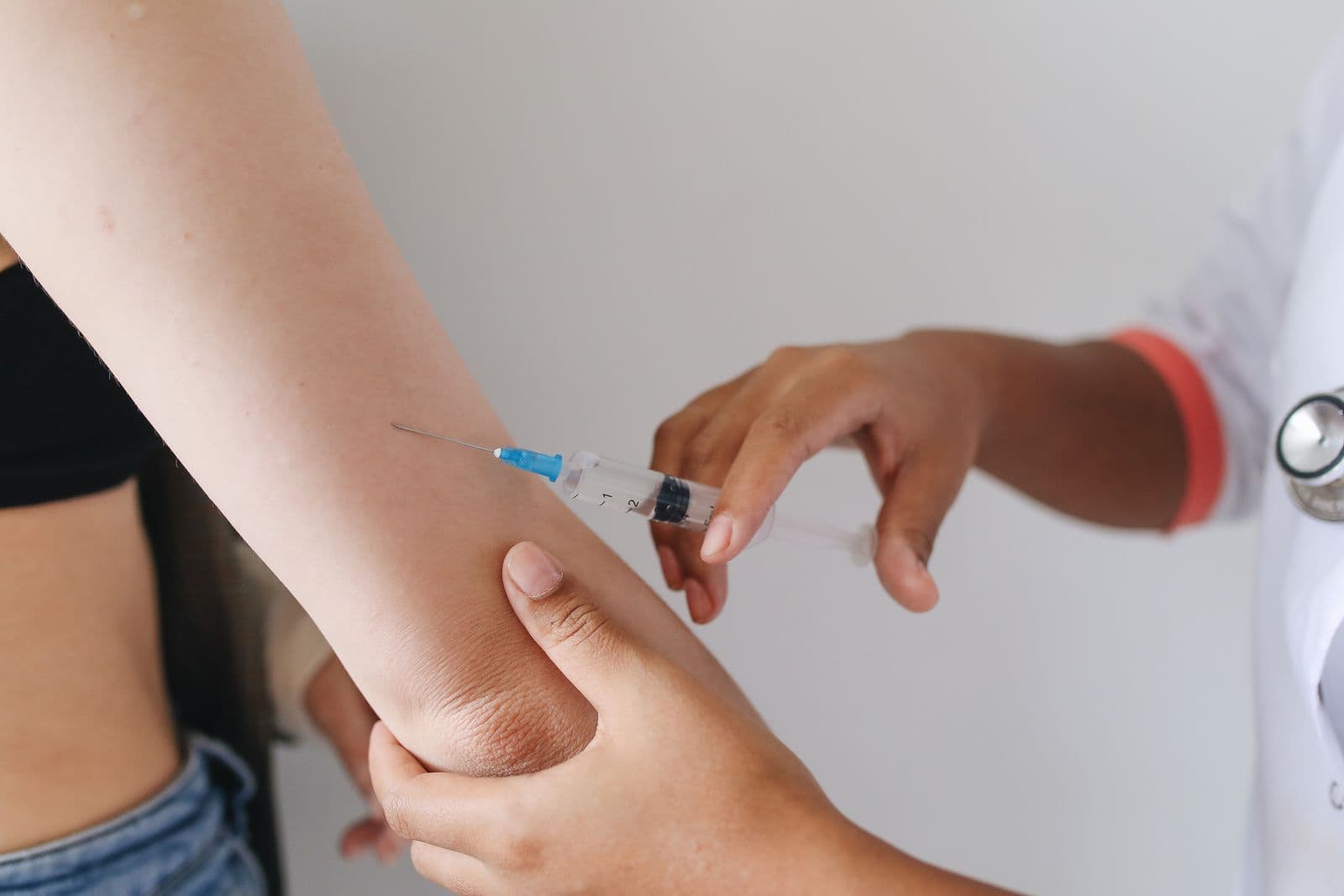
It goes into the upper arm and takes seconds. The most common experience is a sore, heavy-feeling deltoid for a day or two, sometimes with fatigue or a low-grade temperature. Acetaminophen or ibuprofen afterward is fine if you want it, and using the arm normally helps more than resting it. One thing we do take seriously is fainting: vasovagal syncope after any injection is more common in adolescents and young adults, so we have patients stay seated for about fifteen minutes afterward. Tell us if needles have made you lightheaded before and we will have you lie down for the injection.
Fitting three doses into a real year
The adult series is three doses over roughly six months, and the most common reason people end up with one or two is scheduling drift. Book the second and third appointments before you leave the office. If life gets in the way, you do not restart, so a delayed dose is always better than an abandoned series. We can often pair a dose with something you are already coming in for, and we track it on your preventive list so it does not quietly disappear. If a dose interval stretches past a year, come in anyway and we will pick up where you left off.
The screening that continues regardless
Vaccination does not change your cervical cancer screening schedule. Pap and HPV testing continue on the usual interval, because the vaccine prevents new infections rather than clearing existing ones and does not cover every oncogenic type. Our guide to cervical cancer screening, including the HPV self-swab option explains the current schedule. There is no approved HPV screening test for men, which is one reason prevention carries more weight on that side. The National Cancer Institute's HPV and cancer fact sheet and MedlinePlus on HPV are both worth reading before your visit.
The Bottom Line
HPV vaccination isn't only a pediatric issue — for many adults under 45, it remains one of the highest-value preventive steps available. The safety data is excellent, the cancers it prevents are real and often devastating, and the decision deserves more than a reflex "too late for me."
If you'd like to talk through whether HPV vaccination makes sense for you, verify your coverage, or start the series, schedule a visit. We'll review your history, look at your other preventive gaps, and make a plan you can feel good about.


