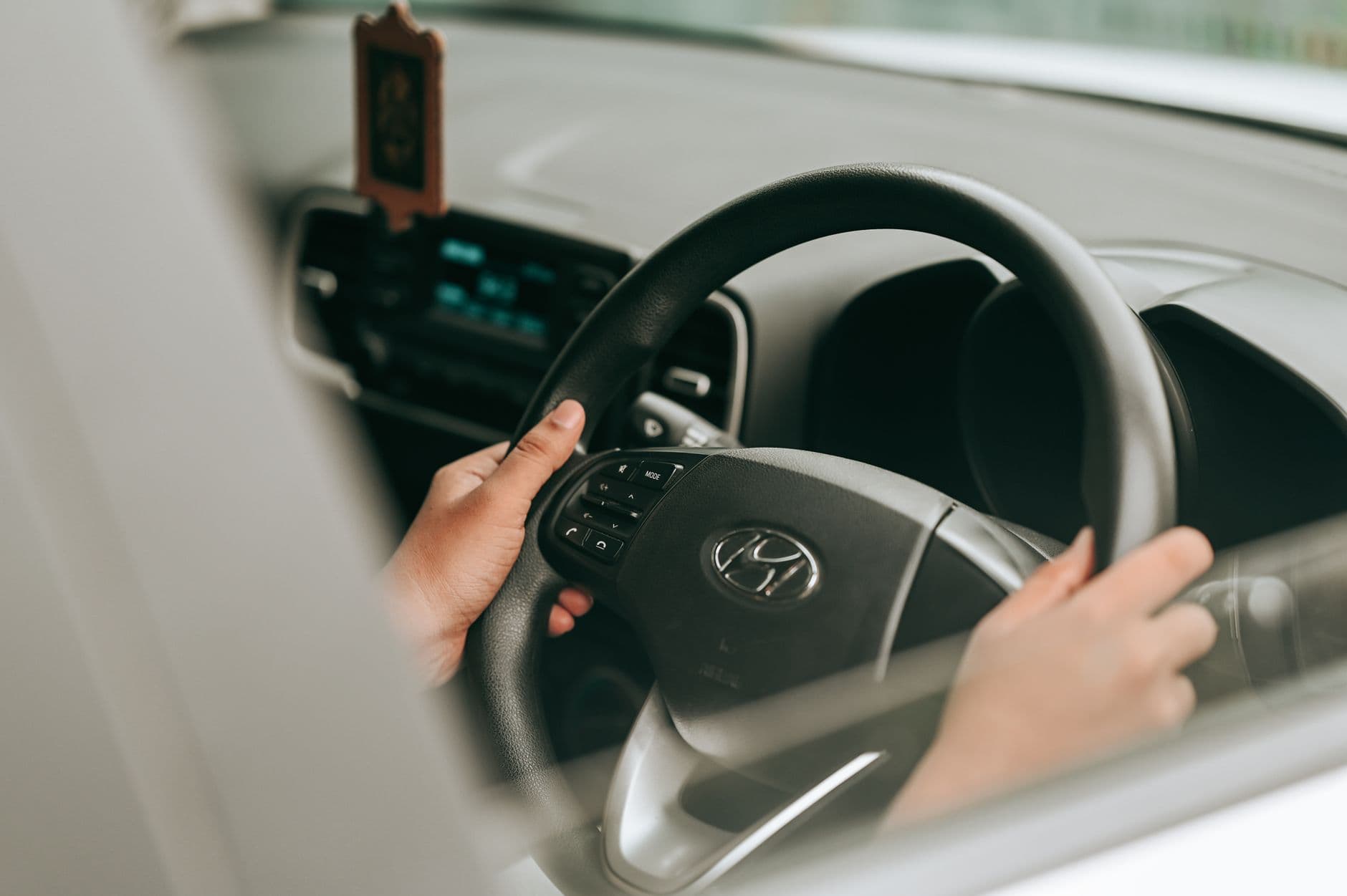

Driving Is Independence, and We Treat It That Way
Ask most people in Pinellas County what they would miss most if they lost it, and driving ranks near the top. It is the grocery store, the grandchildren, the standing Thursday lunch, and the ability to handle your own life without asking anyone. So when families ask us when an elderly person should stop driving, we start from a different question: what is actually happening, and how much of it can we fix?
That reframing is not softening. It is accurate. A large share of the driving problems we see in the office come from correctable causes — an outdated glasses prescription, a cataract that is finally worth removing, a sleep medication that is still on board at 8 a.m., a stiff neck that makes shoulder checks impossible. Fix those, and a safe driver stays a safe driver.
Age Is Not the Deciding Factor. Function Is.
There is no age at which driving automatically becomes unsafe. We have patients in their late eighties who drive better than some patients in their fifties. What matters is a specific set of abilities the task actually requires: seeing clearly at distance and in low light, turning to check a blind spot, moving a foot from accelerator to brake quickly, and holding attention while making judgments under time pressure.
Those abilities decline at wildly different rates in different people, and they decline unevenly in the same person. That is why an honest assessment beats a birthday, and why we would rather have the conversation early, while there is room to make adjustments, than after a crash.
Vision: The First Thing We Check
- Distance acuity drifts, and many people are driving on a prescription that is several years old.
- Cataracts scatter light before they blur it, so the first symptom is often halos and glare from oncoming headlights rather than fuzzy vision.
- Glaucoma takes peripheral vision quietly, and the brain fills in the gap so convincingly that most people never notice until a great deal is gone.
- Contrast sensitivity falls with age even when the eye chart looks fine, which is why dusk becomes the hardest time to drive.
- Dark adaptation slows, so the recovery after a bright pair of headlights takes longer than it used to.
Florida law requires drivers 80 and older to pass a vision test at every license renewal and shortens the renewal cycle for that age group, which means a routine eye exam is not optional planning — it is scheduled anyway. The American Academy of Ophthalmology recommends periodic comprehensive exams for older adults for exactly these reasons, and our article on glaucoma explains why the peripheral loss is so easy to miss.
Medications People Forget Are Sedating
This is the category patients are most surprised by, because the medications in question rarely feel like sedatives after months of use.
- Sleep medications such as zolpidem can leave measurable next-morning impairment, particularly in older adults and in women.
- Benzodiazepines including alprazolam, lorazepam, and clonazepam slow reaction time and impair balance, and our guide to deprescribing benzodiazepines safely covers how to come off them without a rebound.
- Anticholinergics for overactive bladder, such as oxybutynin, cause drowsiness and blurred near vision and are linked to cognitive fog.
- Gabapentin and pregabalin commonly cause dizziness and sleepiness, especially in the first weeks or after a dose increase.
- Sedating antihistamines, muscle relaxants, opioids, and alcohol — and any two of these together are worse than either alone.
None of these are automatically disqualifying. Many can be timed differently, reduced, or swapped for something with a cleaner profile. Bring your complete list, including over-the-counter sleep aids and allergy medications, and we will go through it.
Thinking, Memory, and the Skills Driving Demands
Driving is a cognitive task disguised as a physical one. It requires divided attention, quick visual search, and the judgment to abandon a plan mid-maneuver. Mild forgetfulness does not by itself make someone unsafe. Getting lost on a familiar route does.
The signs that concern us most are trouble with navigation in known territory, difficulty following a sequence of instructions, hesitation at intersections that were never difficult before, and a pattern of misjudging gaps in traffic. In Alzheimer's disease and other dementias, driving fitness eventually ends, but it ends on a timeline that varies enormously, which is why we reassess rather than issue a blanket rule. Our guide to dementia warning signs versus normal aging helps sort the two.
Parkinson's disease adds its own considerations, including slowed movement initiation and, in some patients, the daytime sleepiness that comes with dopamine medications.
The Body Mechanics Nobody Mentions
- Neck rotation. Cervical arthritis limits the head turn a blind-spot check requires. Blind-spot mirrors and a properly widened side-mirror setting genuinely help.
- Shoulder and trunk mobility. Backing out of a space is harder than it looks when rotation is limited.
- Foot and ankle strength. Moving quickly between pedals requires more than it seems, and peripheral neuropathy dulls the feedback.
- Reaction time. It lengthens gradually with age, which is one reason a larger following distance is such an effective adjustment.
- Vehicle fit. Seat height, steering wheel distance, and pedal reach are adjustable, and an occupational therapist trained in driver rehabilitation can optimize them.
Warning Signs Worth Taking Seriously
The Centers for Disease Control and Prevention and the National Institute on Aging both maintain older-driver resources built around observable events rather than opinions. Watch for:
- New dents or scrapes on the car, the mailbox, or the garage door frame
- Other drivers honking often, or passengers who brace or offer directions
- Drifting between lanes, or stopping well past the line at intersections
- Getting lost on routes you have driven for years
- Two or more near-misses, tickets, or warnings in a short period
- Increasing anxiety behind the wheel, or family members declining to ride along
How to Raise It Without a Fight
The conversation goes better when it is about specific evidence and specific solutions, not about age or capacity in the abstract.
- Lead with the observation, not the conclusion. "I noticed the mirror is cracked again" opens a door that "you shouldn't be driving" slams.
- Ask the person what they have noticed. Most older drivers have already self-restricted in some way, and they usually know more than families assume.
- Look for the fixable cause first. An eye exam, a medication review, and a physical therapy referral solve a surprising number of these situations.
- Propose a graduated plan. Daytime only, familiar routes only, no interstate, no rain, no rush hour. Most people accept limits far more readily than a full stop.
- Build the alternatives before they are needed. Pinellas transit, ride services, community shuttles, and a standing arrangement with a neighbor all take time to set up.
- Get an objective assessment. A certified driver rehabilitation specialist conducts a real on-road evaluation. Families find an outside verdict far easier to accept than a relative's.
Florida physicians can refer a driver for a medical review when there is genuine concern about safety. We would much rather reach a shared decision in the exam room, and in our experience we usually do.
The Florida-Specific Hazards Behind the Wheel
Driving in Pinellas County has its own set of conditions that catch older drivers, and each one interacts with a medical issue we can address.
Glare, rain, and the four o'clock storm
Low sun on the east-west roads at morning and evening commute is brutal on an eye with early cataracts, which scatter light before they blur anything. Polarized sunglasses, a clean windshield inside and out, and adjusting the timing of errands do more than people expect, and when the glare is disabling, cataract surgery restores night and low-sun driving for most patients. Summer afternoon storms bring hydroplaning and near-zero visibility within minutes; the safe move is to pull into a parking lot and wait fifteen minutes, which is what the storm usually takes. The National Institute on Aging recommends limiting driving in rain, at dusk, and in glare when vision has changed, and its overview of aging and your eyes explains why contrast and glare recovery decline even when the chart looks fine.
Blood sugar, blood pressure, and the heat
Low blood sugar behind the wheel is a real hazard for anyone on insulin or a sulfonylurea such as glipizide, and the warning symptoms fade with age. Check glucose before a long drive, keep glucose tablets in the console, and pull over at the first sign of shakiness or confusion. Orthostatic hypotension, the drop in pressure on standing, is worse in the summer heat and on diuretics and can cause a gray-out walking from a hot car to the driver's seat. Stand for a moment before getting in, and let the car cool before you drive.
Sleep apnea and daytime drowsiness
Falling asleep at a light, drifting on the interstate, or needing the radio loud to stay alert is not a sign of aging; it is very often untreated obstructive sleep apnea, which multiplies crash risk and is common in our patients over 65. A home sleep study is simple, and treatment restores alertness within weeks. Our senior sleep apnea guide explains what to expect, and if you have nodded off while driving even once, that is the visit to schedule before the next long trip.
When to Come In
Schedule a visit if:
- Vision has changed, glare has worsened, or the eye exam is overdue
- A new medication has brought daytime drowsiness, dizziness, or confusion
- Family has raised concerns, or there has been a near-miss, a ticket, or a minor collision
- Getting lost, hesitating at intersections, or confusing the pedals has happened even once
- Neck stiffness or leg weakness is interfering with mirrors, blind-spot checks, or braking
Stop driving and seek care the same day for any episode of fainting, a seizure, sudden one-sided weakness, sudden vision loss, or a period of confusion you cannot account for.
Worried about your own driving or a parent's? Schedule a visit and we will assess vision, medications, and function before anyone gives up the keys.


