
A Five-Minute Scan That Can Change Your Heart Trajectory
If you're in your 40s, 50s, or 60s and wondering whether you truly need a statin — or whether your "borderline" cholesterol is quietly building plaque — a coronary artery calcium (CAC) scan may be the single most useful test you've never had.
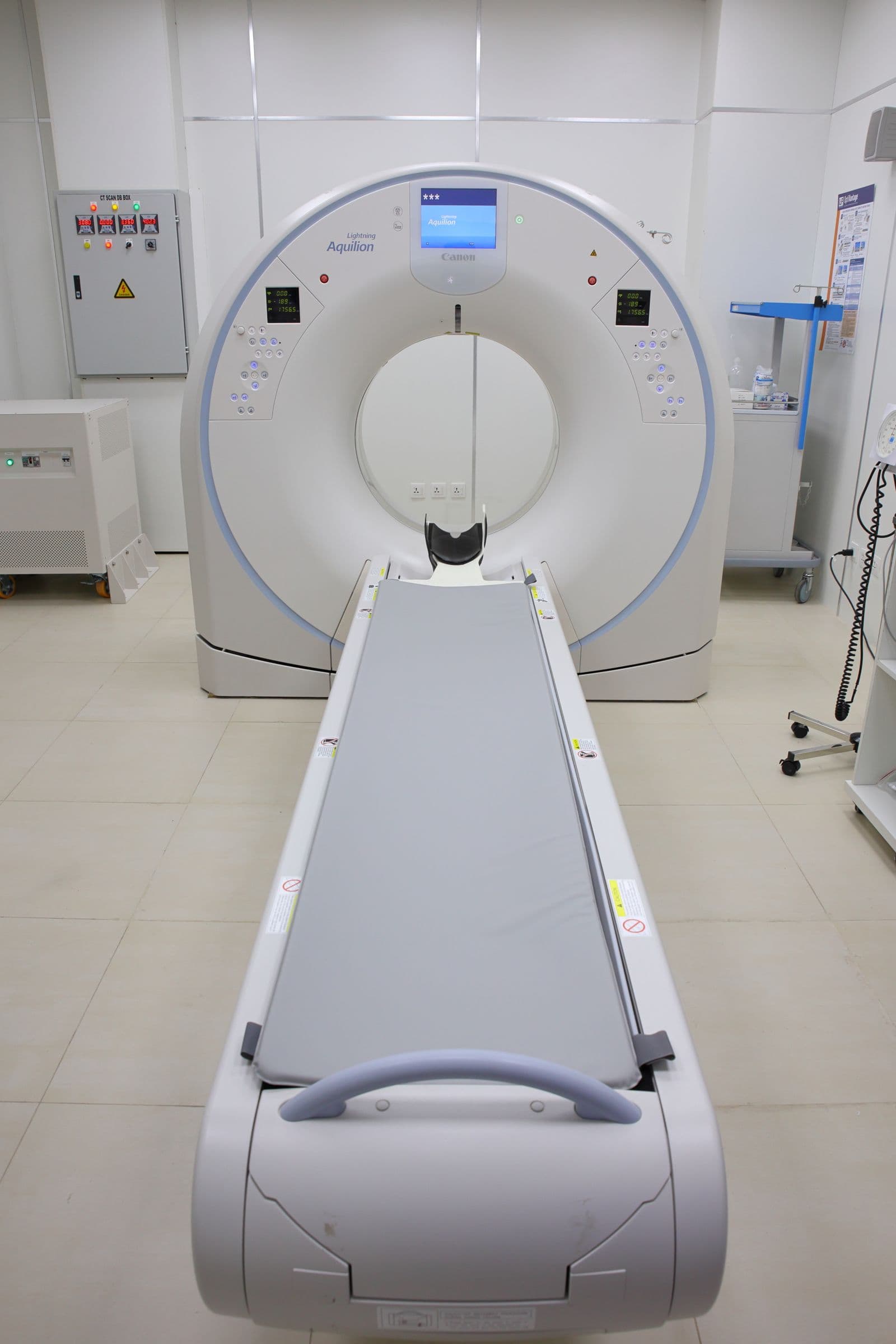
CAC scoring is a non-contrast, low-dose CT of your chest, gated to your heartbeat. It takes about five minutes on the table, requires no IV, no dye, no fasting, and delivers roughly 1 millisievert of radiation — less than a screening mammogram. What it measures is calcified atherosclerotic plaque in the walls of your coronary arteries, producing an Agatston score that correlates tightly with future heart attack risk.
Reading the Score
The number itself is straightforward:
- 0 — no detectable calcified plaque. Very low 10-year risk, even when other risk factors look concerning.
- 1-99 — mild plaque burden.
- 100-299 — moderate.
- 300-999 — high.
- 1,000+ — severe.
Your score is also compared to others of your age, sex, and ethnicity. A 50-year-old woman with a score of 50 sits well above the 75th percentile for her peers — that matters even though the raw number is "mild." The MESA online risk calculator lets us plug in your specifics and see both the absolute and relative picture.
Who Benefits Most
This test is not for everyone. The sweet spot is the patient where treatment decisions are genuinely uncertain:
- Adults 40-75 with an intermediate 10-year ASCVD risk (7.5-20%) who are on the fence about starting a statin
- Strong family history of premature coronary disease (first-degree relative, men under 55 or women under 65)
- Metabolic syndrome without established diabetes
- Patients who are "statin-reluctant" and want objective data before committing
- Anyone with persistently elevated LDL where your personal risk picture is unclear
I explore the decision-making around lipid therapy in statin myths vs. evidence and understanding cholesterol. A CAC score often settles that conversation in a single number.
Who Does NOT Need One
Equally important — some patients have nothing to gain:
- Known coronary disease, prior stent, prior bypass, or prior heart attack — you already have the diagnosis
- Diabetes age 40-75 — already statin-indicated by guidelines
- LDL-C ≥ 190 mg/dL — already statin-indicated regardless of score
- A prior positive CAC — repeating it rarely changes management
- Very low risk (young, no risk factors) or very high risk (multiple events) — the result won't move the needle
If your family medical history already puts you clearly in a high-risk group, we skip straight to treatment.
How Results Change Management
This is where CAC earns its keep. According to the American Heart Association and recent ACC guidance:
- CAC = 0 in an intermediate-risk patient often means we can defer statin therapy and focus on lifestyle, revisiting in 5-10 years.
- CAC 1-99 usually tips the decision toward a moderate-intensity statin like atorvastatin 20 mg.
- CAC ≥ 100 or ≥ 75th percentile for age moves us toward high-intensity therapy — rosuvastatin 20-40 mg or atorvastatin 40-80 mg — and prompts a conversation about low-dose aspirin in selected patients.
- CAC ≥ 300-1,000 flags someone who likely also needs attention to blood pressure, weight, and symptoms suggestive of early warning signs of a heart attack.
A high score reframes hypercholesterolemia and underlying coronary artery disease from abstract numbers into a concrete picture of what's already happening inside your arteries.
Cost and Access in 2026
Most commercial insurers and traditional Medicare still consider CAC a screening test and do not cover it. The good news: market pricing has dropped sharply. In the Tampa Bay area, self-pay runs roughly $50-200, and a growing number of Medicare Advantage plans and some HSA/FSA accounts will cover it with an appropriate order. I write the order specifying a cardiac-gated protocol so your radiologist produces a proper Agatston score, not just a chest CT.
What CAC Does NOT Do
It's important to be honest about limits. CardioSmart explains this well: the scan sees calcified plaque. A younger patient — often under 45 — can have soft, non-calcified plaque that hasn't hardened yet and won't show up. That's why we use CAC alongside lipid panels, blood pressure, and family history rather than in place of them. It's also why a zero score in a 35-year-old smoker doesn't mean "no risk" — it means "no calcium yet."
What Happens on Scan Day, and After the Number Comes Back
A calcium score is a simple test, but the questions that follow it are not. Here is what patients most often wish someone had explained ahead of time.
The scan itself, and the findings you did not ask for
You lie on the CT table for a few minutes with electrodes on your chest so the scanner can time its pictures to your heartbeat, hold your breath briefly, and go home. Because the scan captures the lungs and the aorta along with the heart, incidental findings are common: small pulmonary nodules that usually turn out to be scars from old infections, a mildly enlarged aorta, or calcium in the heart valves. Most need nothing more than a follow-up image at an interval set by the radiologist, but I mention this up front so a line on the report does not become a sleepless week. MedlinePlus describes the heart CT procedure in plain terms.
A high score is not a reason for a stress test if you feel fine
Calcium tells us plaque exists; it does not tell us an artery is narrowed enough to limit blood flow. A high score in someone with no chest pain or breathlessness on exertion leads to more intensive prevention, not to a catheterization. The tools for that are a high-intensity statin, adding ezetimibe when the LDL target is not reached, blood pressure control, and a frank conversation about smoking and weight. Exertional chest pressure or unusual shortness of breath is a different story and does warrant a functional test, which the NHLBI diagnosis overview walks through. The USPSTF statin recommendation is the guideline we anchor the treatment decision to.
When a zero does not let you off the hook
A score of zero is reassuring for most intermediate-risk adults, but it carries less weight in people who smoke, in those with diabetes, and in anyone with a markedly elevated lipoprotein(a), which drives risk through plaque that may not have calcified yet. If you have a strong family history and a zero score, an Lp(a) test and an ApoB level round out the picture. Our cardiovascular team reviews every score in the context of the whole risk profile rather than the number alone.
The Bottom Line
For the right patient at the right age, coronary calcium scoring is the closest thing we have to a window into your future heart health. A zero can provide well-earned reassurance. A high score can be the wake-up call that adds a decade to your life. The key is ordering it thoughtfully and interpreting it in the context of your full picture.
If you're weighing a statin decision, have a worrying family history, or simply want a clearer read on where your heart stands, schedule a visit. We'll review your risk factors, decide together whether CAC is the right next step, and build a plan based on what the scan actually shows.


