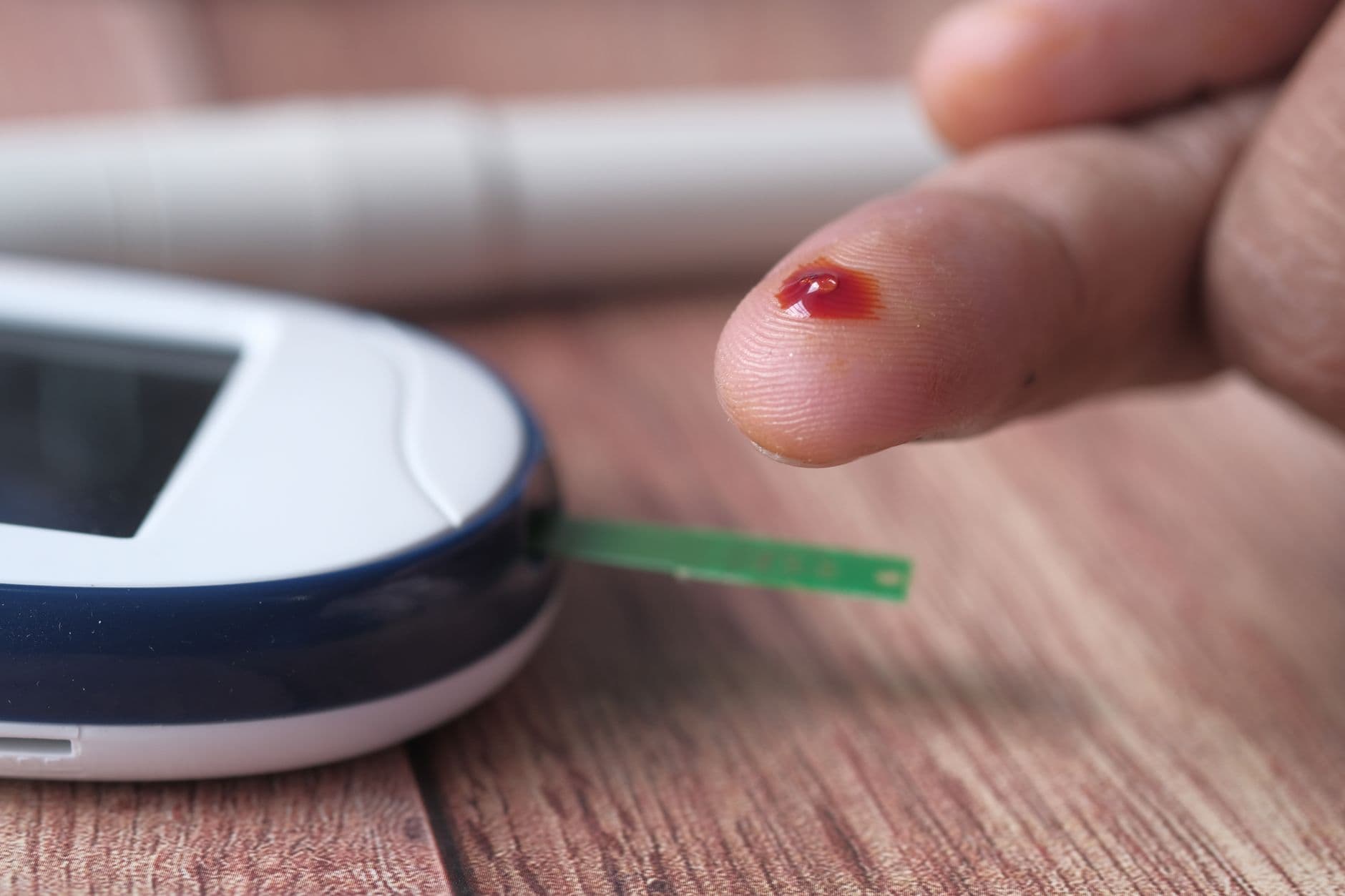

What You Are Actually Buying
Continuous glucose monitors are now sold over the counter in the United States, and plenty of people wearing them do not have diabetes. The appeal is obvious. A small sensor on the back of the arm, a graph on your phone, and what looks like a direct readout of how your body handles food.
The technology is real and the data is real. What is far less clear is what a continuous glucose monitor for non-diabetics should actually change about your life. Some patients get genuine insight from one. Others end up anxious about oatmeal.
Here is how we think about these devices when patients bring the question to Zimmer Medical Group, including where they earn their price and where they mislead.
The Sensor Is Not Measuring Your Blood
A glucose sensor does not sample blood. A tiny filament sits in the interstitial fluid just under the skin and measures glucose there, and an algorithm converts that signal into the number you see on the screen.
That distinction explains most of the confusing readings people report:
- There is a lag. Interstitial glucose trails blood glucose by roughly five to fifteen minutes, so during a fast rise or fall the sensor is behind reality.
- There is a warm-up period. The first hours after insertion are the least reliable, and many sensors drift over their final day of wear.
- Pressure causes false lows. Sleeping on the sensor produces a dramatic overnight dip that never happened. These compression lows alarm people constantly.
- Sensor-to-sensor variation is real. Two sensors worn at the same time can disagree by a noticeable margin.
None of this makes the device useless. It does mean a single startling number is far less meaningful than a pattern repeated over days. The FDA has cleared several of these systems for over-the-counter use in adults who do not take insulin, and the labeling is explicit that they are not intended to diagnose disease.
What a Post-Meal Spike Does and Does Not Predict
The most common revelation people report is that a meal pushed their glucose up sharply. They find this alarming. In a person without diabetes it is usually just physiology.
Glucose is supposed to rise after eating. A healthy pancreas responds, the number comes back toward baseline within a couple of hours, and nothing pathological has occurred. Rice, bananas, and bread all do this. So does a night of poor sleep, a hard workout, a viral illness, and a stressful phone call, because cortisol and adrenaline raise glucose independently of anything you ate.
What matters clinically is not the height of a single peak. It is the overall pattern: where glucose sits when you have not eaten, how long the excursions last, and whether the baseline is creeping upward over months. That is the information that separates normal from impaired fasting glucose.
Where a Sensor Genuinely Earns Its Keep
There are real uses, and we do not dismiss the device out of hand.
- Making prediabetes concrete. For someone with a borderline A1C who has struggled to change habits, watching the effect of a walk after dinner in real time is a more persuasive teacher than a lab slip.
- Sorting out post-meal symptoms. Shakiness or fogginess a few hours after eating can be matched against actual readings instead of guesswork.
- Understanding overnight patterns. A consistently high morning reading, confirmed across many nights, is worth discussing.
- Testing specific swaps. Comparing the same meal with and without added protein or fiber, repeated several times, produces something you can act on.
Used as a two-week experiment with a question attached, a sensor can be excellent. Used as a permanent scoreboard, it usually is not.
Where It Backfires
The failure modes are predictable, and we see all of them.
Food anxiety is the big one. Patients begin eliminating foods that produced a perfectly normal, healthy rise, narrowing the diet toward something less nutritious than where they started. In anyone with a history of disordered eating, we generally advise against wearing one at all.
The second problem is false reassurance. A pleasant-looking two-week graph does not rule out early metabolic disease, and it says nothing whatsoever about your cholesterol, blood pressure, liver, or kidney function. Some patients skip labs because the app looked fine.
The third is chasing noise. Compression lows and end-of-wear drift generate readings that would be concerning if they were true, and they are not true. Reacting to each one produces stress without information.
The Tests That Still Do the Diagnosing
Diabetes and prediabetes are diagnosed with a fasting plasma glucose, an A1C, or a glucose tolerance test, not with a wearable. The American Diabetes Association has not adopted sensor data as a diagnostic criterion, and those readings do not substitute for the numbers we use to make decisions.
If you are wearing one and the pattern looks off, the next step is a blood test rather than a longer wear time. Our explainer on what your A1C actually means covers what that number captures, and our piece on blood sugar spikes covers what to do about the pattern itself.
If You Are Going to Wear One, Wear It Well
A sensible protocol looks like this:
- Decide the question in advance, for example what happens to your glucose when you skip breakfast
- Wear it for two to four weeks rather than indefinitely
- Keep a simple log of meals, sleep, exercise, and illness so the graph has context
- Ignore single readings and look for patterns that repeat at least three times
- Get a fasting glucose and an A1C during the same window so the data can be anchored
- Bring the summary to your visit rather than to a search engine
For patients who turn out to have type 2 diabetes or clear prediabetes, the conversation changes entirely. There the device has an established role alongside proven treatment such as metformin where it is indicated, structured nutrition, and regular activity. The National Institute of Diabetes and Digestive and Kidney Diseases publishes reliable background on both conditions.
Reading Your Two Weeks of Data
Once the sensor comes off, the question is what the graph actually says. Here is how I read one when a patient brings it in.
What a normal pattern looks like
In someone without diabetes, glucose sits in a fairly narrow band overnight and before meals, rises after eating, and returns to that band within a couple of hours. The rise is larger after refined carbohydrates eaten alone and smaller when the same food is eaten with protein, fat, or fiber, or followed by a walk. Occasional readings above or below the band mean little. What I look for is the baseline: where the line rests at 6 a.m. across many days, and whether it is drifting upward compared with a fasting glucose drawn in the same window. NIDDK's continuous glucose monitoring page explains what the devices measure, and the FDA's clearance announcement spells out that over-the-counter sensors are meant for people not taking insulin.
Exercise, heat, and the sensor itself
A hard workout can push glucose up briefly, because adrenaline releases stored sugar, and then pull it down for hours afterward; both are normal. Florida adds two practical problems. Heavy sweating and swimming loosen the adhesive, so an over-patch is worth having, and dehydration on a hot afternoon can nudge readings up in a way that has nothing to do with food. Alcohol, on the other hand, can produce a delayed dip overnight, which is worth knowing before you blame dinner.
The patterns that send us to the lab
A fasting line that consistently rests above the normal range, or excursions after ordinary meals that stay elevated for many hours, is the picture of impaired fasting glucose and calls for an A1C and fasting glucose rather than another sensor. That pattern rarely arrives alone; it travels with the waist size, blood pressure, and triglyceride pattern of metabolic syndrome, and with untreated obstructive sleep apnea, which raises morning glucose all by itself. MedlinePlus summarizes how prediabetes is diagnosed. If the labs confirm it, the prediabetes reversal guide is the next step, and our endocrine team helps when medication such as metformin becomes part of the plan.
When to Call Us
Book a visit rather than buying another sensor if you have:
- Readings that repeatedly stay high after eight hours or more without food
- True low readings with symptoms such as sweating, tremor, or confusion that resolve with food
- Increased thirst, increased urination, blurred vision, or unexplained weight loss
- A family history of type 2 diabetes plus an A1C that has been rising over the past few years
- Any low reading accompanied by confusion or loss of consciousness
Seek emergency care for confusion, fainting, or a seizure associated with a low reading, whether or not you take a glucose-lowering medication.
The Bottom Line
A continuous glucose monitor measures interstitial glucose with a lag and a margin of error, shows patterns rather than diagnoses, and rewards a specific question over open-ended monitoring. Wear one for a few weeks with a purpose, pair it with real laboratory testing, and do not let a normal post-meal rise talk you out of eating a peach.
Wondering whether a glucose sensor would tell you anything useful? Contact Zimmer Medical Group and we will look at your numbers first.


